- Analysis of the current context
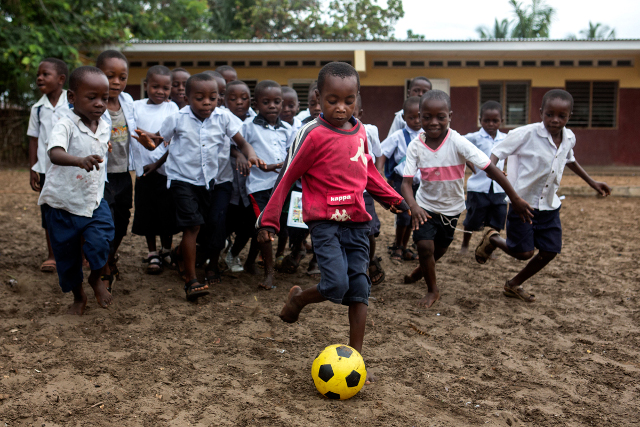
In the Democratic Republic of Congo, many girls dream of playing sport, whether football, basketball, athletics or other disciplines. But all too often, they run up against deep-rooted stereotypes:
- “Sport is for boys.” In some schools, sports grounds are reserved almost exclusively for boys, while girls are steered towards activities considered “more feminine”, such as dance or sewing.
- “A sporty girl is less feminine.” Teenage girls say they are mocked or discouraged by their own families because they sweat, wear shorts or come home late from training.
- “A girl who runs or plays football loses her dignity.” In several communities, a girl who takes up competitive sport is seen as “rebellious” and judged unfit to become a “good wife”.
- Some young sportswomen give up after suffering public insults, or even bans imposed by their parents on the pretext that sport “dishonours the family”.
- The few girls who persist often have to cope with a lack of suitable changing rooms, harassment on the pitch, or the absence of institutional support to encourage them to go further.
In the Democratic Republic of Congo, only 32% of girls play sport regularly, compared with a majority of boys. This gap highlights the weight of stereotypes and social obstacles that hold back girls’ access to sport.
At the same time, the school drop-out rate among girls reaches 18%, often linked to early marriage, pregnancy or a lack of family support. Sport can play a concrete role in preventing this risk:
- By offering a structured and safe space, it makes girls less exposed to situations of vulnerability.
- By encouraging discipline, perseverance and leadership, sport boosts motivation at school and self-confidence.
- By building positive social relationships, it helps girls form a network of friends and mentors who support them through their education.
Sport is therefore not just a right and a pastime: it becomes a tool for empowerment and protection, able to reduce school drop-out and fight gender inequality.
- Illustrative testimony
Beyond being hurtful words, these prejudices become genuine structural obstacles that limit girls’ freedoms and opportunities. And yet sport is a right, a space for self-expression and a powerful tool for empowerment.
Take the example of Grâce, 15, a pupil at a secondary school in Goma. Passionate about football, she dreamed of joining the boys’ team in her neighbourhood. But she was soon met with mockery: “You’re wasting your time, football is for boys.”
Her family eventually banned her from playing, believing it tarnished her image. Like many other girls, Grâce had to give up her dream for lack of a supportive and caring environment.
Sport-related stereotypes hit even harder for girls who are displaced, affected by conflict, from poor families, teenage mothers or married early, as well as those living in rural areas where women’s sport is virtually non-existent.
3. Persistent obstacles
Grâce’s story is not an isolated case. It reflects a reality in which:
- Girls have no safe spaces to play.
- They face social and family pressure.
- Female role models in Congolese sport remain barely visible.
- Suitable facilities (changing rooms, equipment) are lacking.
These barriers deprive girls not only of a passion, but also of a fundamental right to education and personal development through sport.
4. International standards and girls’ right to play sport
It is worth recalling that sport is not just a recreational activity but a fundamental right, notably under the Convention on the Rights of the Child (art. 31: the right to rest, leisure and recreational activities), the DRC’s commitments on gender equality and the African Youth Charter. We also refer to other international legal instruments, such as:
- Convention on the Elimination of All Forms of Discrimination against Women (CEDAW, 1979), article 10(c). CEDAW requires States parties to eliminate discrimination in education and training, including access to sporting and recreational activities. Girls must have the same opportunities as boys to take part in physical activity and sport at every level (school, community and professional).
2. Universal Declaration of Human Rights (UDHR, 1948), article 26 (right to education) and article 1 (equal rights), which states that all individuals, girls and boys alike, have the right to education, including the opportunity to take part in cultural, sporting and recreational activities. The Declaration guarantees a fundamental right of access to sport without discrimination based on sex.
3. Resolutions of the International Olympic Committee (IOC), referring to the Olympic Charter and resolutions on gender equality, which aim to promote the equal participation of women and girls in sport and to combat discrimination in all sports, at every level.
4. Beijing Declaration and Platform for Action (1995), World Conference on Women (Section K, paragraphs 112-118), which encourages governments to promote access for women and girls to sport and to remove barriers to their participation, including discrimination and gender stereotypes.
5. International Charter of Physical Education and Sport (UNESCO, 1978), which aims to promote sport and physical education as drivers of peace and equality. It applies to women’s sport and stresses the need to remove the social and cultural barriers that limit girls’ participation.
6. Convention on the Rights of the Child (CRC, 1989), articles 29 and 31. Article 29 states that education must aim at the full development of the child, including physical development, and article 31 states that children have the right to play, leisure and participation in cultural and sporting activities. States must create an environment that promotes equal access to sport for girls and boys. Together, these instruments form an international legal and policy framework to guarantee girls equal access to sport, eliminate gender-based discrimination and encourage States to develop inclusive sports facilities and programmes.
5. Possible solutions
To reverse the trend, we recommend:
- Educating and raising awareness among families and communities to break down gender stereotypes.
- Creating clubs and safe spaces where girls can play without fear.
- Showcasing Congolese and African female role models in the media.
- Linking school and sport, so that sport is recognised as a complement to education.
- Working in partnership with local NGOs to develop inclusive sports programmes in schools and in the community.
6. The commitment of SAPI and its local partner CADERCO
Aware of these challenges, SAPI, in partnership with the local association CADERCO RDC, is developing initiatives that combine sport, protection and education:
- Community workshops to deconstruct gender stereotypes linked to sport, with pilot actions in Kalehe territory
- Inclusive sports clubs where girls and boys play together to promote equality.
- Awareness sessions on girls’ rights before and after matches.
- Psychosocial support programmes for girls who experience discrimination or violence linked to sport.
- Advocacy with schools and local authorities to include more girls in competitions and sports facilities.
7. Conclusion
Enabling girls to play sport in the DRC is not just about offering them a pastime: it gives them confidence, protection and equality. By breaking stereotypes and creating safe spaces, we contribute to their empowerment and their success at school. With the support of SAPI Belgium and CADERCO, every girl can dream, run and score her own goals in life.
We would love to hear your views on these 3 questions:
➡️ In your view, can sport become a real lever for girls’ empowerment in the DRC?
➡️ What other measures should we put in place to break the stereotypes that hold girls back?
➡️ How can we encourage more families to support their sporty daughters?